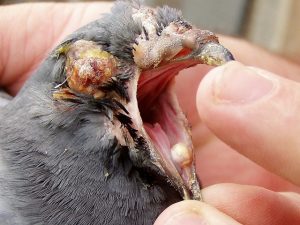

During the last moulting season, a few pigeons were sneezing, with dark, dirty grey cere. They were tearing and had runny noses. My vet diagnosed mycoplasmosis and prescribed enrofloxacin. I treated the sick pigeons in isolation and they were cured, but their molting did not go well, they had a lot of bad feathers. Does mycoplasma also cause defective moulting? I thought only circovirus caused this.
*
Indeed, the circovirus can directly cause a feather development defect, but the mycoplasma does not cause a moulting defect as far as we know. Rather, it is the antibiotic (in this case enrofloxacin) given during moulting that may be responsible for defective feathers.
The moulting season is a highly stressful time for all birds, which means that their immune systems are weaker than at other times. Because of this weakness, an attack by a pathogen can have a more severe effect on the pigeon’s body than at other times.
Sneezing, dirty grey cere, tearing, often accompanied by a low puffing sound… These are the typical symptoms of mycoplasmosis, a disease that often occurs during the moulting period. So the question is: should it be treated during this period?
We know that the most important thing during the moulting period is a balanced supply of nutrients and a healthy gut flora. If the intestinal flora is disturbed, the absorption of nutrients is disrupted, with a direct consequence of impaired development of the newly growing feathers. Since defective feathers remain on the birds until the next moult, special emphasis is placed on a flawless moult.
So what do we do? One might ask, which finger do we bite? Don’t treat, but then we can prepare for losses, even a large number of deaths. Or do we give antibiotics, which may save the sick pigeons but ruin their plumage?
The answer depends on the severity of the existing disease. If the symptoms are severe, then we need to treat it, because it is still much better to have a pigeon with defective plumage than one that has died. If not many pigeons are affected, they should be separated as soon as possible and these sick individuals should be treated separately.
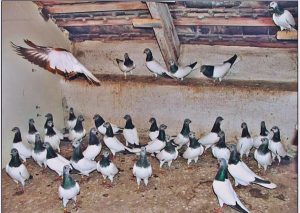
It should be noted, however, that prevention is the answer. Especially in this case, as we are talking about mycoplasma. Mycoplasmosis is typically an “indicator disease”. It indicates that something is very wrong in the area around your loft. It is usually overcrowding and the resulting poor loft hygiene. Excessive draughts, high humidity, constant disturbance of each other, i.e. constant stress. The stress effect further weakens an already weakened immune system when moulting. Mycoplasmas, which are always lurking in small numbers in the pigeons’ bodies, are just waiting to happen. They take advantage of the immune system’s weakness to multiply and cause symptoms and disease by overproliferating in the body. This should be prevented by proper husbandry and good loft hygiene.
Before molting, check the loft hygiene. You can also do a clean-up before molting to avoid stressing the pigeons during molting. A worming won’t hurt either. The most important thing is to set the right number of pigeons. Do not allow overcrowding, get rid of excess pigeons by careful selection. This is essential, because if we don’t do it, diseases will decimate the flock for us. And they will do the selection in their own way: they will typically take the most beautiful individuals.
Note
Iodine is an important constituent of thyroid hormone, which plays a key role in metabolic processes, and is therefore important for the development of perfect feathers. Give a good quality iodine supplement, but be careful as it is easy to overdose on iodine, which can be harmful to new feathers. Use good quality factory-made products and follow the dosage instructions exactly. The same applies to various vitamins and trace mineral preparations. In addition, unless it is a life-saving measure, do not give any medication to pigeons during the moulting period.