
Vitamins, which are needed in the course of metabolic processes, are indispensable compounds for animals and human beings. Pigeons either receive vitamins directly as part of their feed, or acquire them in the form of so-called pre-vitamins, which turn into efficient vitamins inside the body.
The body’s vitamin requirements vary. It requires a certain amount at all points of its life, but needs more than average at a young age, during growth, moulting, pairing, rearing of chicks, as well as during and after illnesses. The need for certain vitamins typically increases under significant physical burdens (racing) and particularly under stress.
In pigeon-breeding, we regularly give vitamins to prevent vitamin deficiency from developing. We must be aware that for the above reasons the requirements can increase, even to a high degree, and the dose must be raised accordingly.
Inadequate intake or absence of vitamins can lead to the development of severe illnesses, which, naturally, can be prevented or treated with a dosage of the appropriate vitamin.
Vitamin A
It is essential for the health of the epithelial tissue of the skin and for growth of the bones, and also plays a very important role in vision. Its pre-vitamin carotene is of key importance in reproductive processes; a lack of it leads to a decline in propensity for pairing, and infertility of eggs.
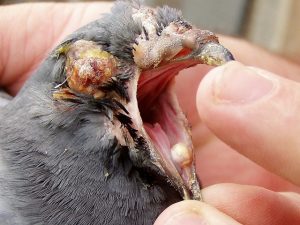
As pigeons consume little green food, carotene and vitamin A deficiency can easily develop, and supplements must be administered on a regular basis. The intake of vitamin A is particularly important in the case of illnesses attacking the epithelium, like pox. On such occasions we should administer vitamin mixtures containing vitamin A in large (but not too large) doses.
If reproductive disorders appear, it is certainly advisable to give carotene as well as vitamin A, especially if these are connected to problems with the operation of the liver (e.g. because of an antibiotics overdose). It may be that the infertility of eggs can be traced back to the relative lack of carotene in many more instances than we might expect.
B vitamins
The members of this group of vitamins play a role in a wide variety of metabolic processes, and so a shortage of them can manifest itself in many different symptoms. An insufficient intake leads to general dispiritedness, weight loss, a combination of neurological symptoms, and a tendency to illness.
Whole (unhusked) seeds of cereals contain them in large quantities, and so the pigeons’ daily requirement is usually guaranteed. If for some reason the consumption of feed declines or stops, or the body’s vitamin B requirement increases as a result of some illness, it is essential that pigeons be given B vitamins in their water, or in more severe cases by injection.
Some medicines against coccidiosis contain amprolium, which has the effect of expelling vitamin B1. Amprolium blocks the operation of vitamin B1 in the whole body of the pigeon, not just in the coccidia, thereby causing dispiritedness and exhaustion. Therefore we must not use medicines containing amprolium before races and exhibitions!
Vitamin C
It is the most significant anti-stress vitamin. It is primarily recommended in very hot weather, or during lengthy transportation or illness.
Vitamin C helps the body to neutralize and expel toxic, poisonous substances. As most antibiotics are toxic for the system, it is useful – especially in the case of a longer course of antibiotics – to complement them with vitamin C therapy. (It must not be administered together with gentamycin.)
If there is a prolonged burden on the skeletal muscle, the relative lack of oxygen means that after a while lactic acid inevitably develops in the muscle cells, which also has a toxic, cell-damaging effect. Vitamin C aids the removal of the lactic acid from the muscle cells before it causes greater damage. For this reason, it is very effective if administered before races and immediately after arrival.
Vitamin D
Its most important role is in the regulation of calcium (lime) and the associated phosphoric metabolism.
A lack of vitamin D principally causes ossification disorders (rickets). Hens’ vitamin D requirements increase during the breeding season, when they may be a need for it to be administered on a systematic basis. As in the absence of vitamin D calcium is not adequately absorbed from the gut, we cannot effectively prevent osteomalacia and eggshell deficiency (paper eggshells) by the application of lime feed alone.
Overdose of vitamin D is also dangerous, as it can cause bone fragility and general calcification of the tissues, inducing locomotor disorders, for example.
Vitamin E
If the vitamin is insufficient or absent (especially if the specimen also suffers from selenium deficiency), dystrophy of the heart muscle and skeletal muscle occurs, which is particularly damaging for racing pigeons. It also has a very important role in reproduction, and stock birds – males and females – cannot be without it for healthy spermatogenesis. In its absence the number of infertile eggs increases, which can be aggravated by a decline in propensity for pairing.
Vitamin K
It is necessary for healthy operation of the liver and blood coagulation. Normal intestinal flora produces it on a continuous basis, and so there is rarely a shortage of it. If the intestinal flora is chronically restricted, damaged or destroyed, however (e.g. after a course of antibiotics), then a vitamin K deficiency can appear, which causes disorders in liver operation and blood clotting.