
Like chlamydias, mycoplasmas are single-cell creatures that represent a half-way house between bacteria and viruses. They are smaller and simpler in structure than bacteria, and one of their important characteristics is that they do not have cell walls. From this it follows that any antibiotics that attack cell walls (e.g. penicillin derivatives) have no effect on mycoplasmas.
Mycoplasmas are highly prevalent in the environment. They are present in small numbers in the bodies of most pigeons on a continuous basis, but, because they are in equilibrium with the immune system, do not produce any symptoms. They only attack if the pigeon’s resistance is weakened for some reason. They primarily target the eyes and respiratory system.
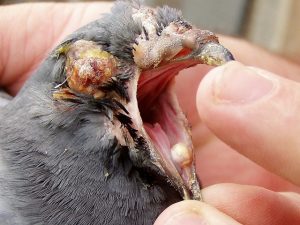
The pathogen attacks the mucous membranes of the respiratory passages, causing inflammation of the mucosa of the throat and nose, and conjunctivitis. Spreading further, it damages the lower respiratory passages, the lungs, the walls of the air sacs, and also the abdominal membrane (peritoneum).

A typical way in which mycoplasmas spread infection is through the egg. If the egg is also infected with other pathogens (salmonella, coli), the embryo will probably die, or a chick will hatch that will not survive. If the egg is only infected with mycoplasma, the chick hatches, but is infected from day one.
As mycoplasmas are present in the pigeon’s body on an almost continuous basis, there is no need for it to be infected from outside for illness to break out. Any circumstance that weakens the pigeon’s immune system can cause the existing balance between the mycoplasma and the body to be upset: the mycoplasmas are freed from the restraints imposed by the host system, and proliferate wildly, generating the illness that is characteristic of them. Such a circumstance is often the primary attack of some other pathogen (which can be a virus, bacterium or even parasite), sustained stress, or, most likely of all, overcrowding. The insufficiency of air hygiene caused by the latter (bad quality air, or too strong ventilation used to counter it) necessarily causes mycoplasmas to flare up.
The complete eradication of mycoplasmas from a specimen is difficult, and is at best temporary, as it quickly becomes infected all over again. It is also unnecessary. The system of a pigeon whose general condition and immune state is good defeats the pathogen of its own accord, or at least keeps it under continuous inspection. We only need to treat against mycoplasma if these supposed pathogens proliferate too wildly in a system weakened in some way (stress, primary disease).
Antibiotics that are ineffective against them include penicillin derivatives like amoxicillin, ampicillin and cephalosporin. Typically, the most effective agents are the following: enrofloxacin, lincomycin, tylosin, tiamulin, sulfachlorpyridazine, chlortetracycline and oxytetracycline, and, last but not least, doxycycline.
The period of treatment with antibiotics should be 4-5 days, but this is only sufficient if the factor making the bird disposed to mycoplasmosis is eliminated within this time. If it is not, the illness will re-emerge soon after the medication is stopped.
The antibiotic treatment should be accompanied with immune boosters and vitamin mixtures. After the course of treatment we should give the flock probiotics for a few days.
Note
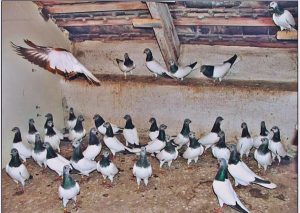
As the pathogen only attacks if there is already some problem with the conditions in which the birds are kept (that is, with prevention of epidemics, hygiene, or excessive burdens), we can also consider the appearance of mycoplasma symptoms as a kind of warning sign. If mycoplasma has flared up, we must of course treat against it, but in addition we must also research into and eliminate the original causes that have precipitated it. As we mentioned above, experience shows that one of the most common reasons for the development of mycoplasmosis is overcrowding within the loft.
It does no harm to observe the old saying: every pigeon needs a perch, but not every perch needs a pigeon.