
3. Prevention of epidemics between lofts
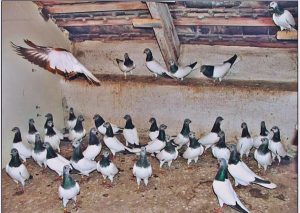
If you keep pigeons in several places in a yard, the health of the flocks in the different cages may vary. This may be due, for example, to the different ages of the birds and different vaccinations at different times.
The epidemiological situation may also vary from loft to loft when a disease rears its ugly head in one loft. In such a case, we would certainly want to prevent the pathogen from spreading to other lofts. In this case, we need to use essentially the same techniques as discussed in part two: designate the infected cage as a temporary “quarantine” and operate it accordingly. If we can prevent the infection from spreading to other lofts, we can save ourselves considerable damage and even a lot of money. But even if we do not manage to stop the spread of the disease within the yard, but only to slow it down, it is better than nothing; we have time to actively protect the other lofts in the yard by preparing them against the disease.
Irrespective of this, we should strive as much as possible to maintain the immune state of every pigeon in our yard at the highest possible level, a goal that, in addition to a scheduled vaccination programme, we can principally achieve by keeping the birds in an optimal fashion. We will discuss these in more detail in the blog “Hygiene”.
.
4. Prevention of epidemics within the loft
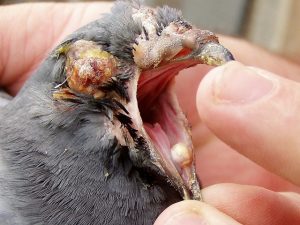
One of the characteristics of infectious diseases is that the pathogen spreads from one individual to another, gradually infecting more and more individuals and causing disease in a certain proportion of them. (Again, it is important to stress that not all infected pigeons become ill, i.e. show the symptoms of the disease. A specimen may remain infected for a long period of time, even years, without any symptoms, i.e. it may appear perfectly healthy, but continue to carry and spread the disease!) If one of our pigeons becomes infected, the pathogen, be it a virus, bacterium or parasite, will sooner or later spread within the loft – and often unnoticed. Clearly, we do not want this to occur, but to stop it we must consistently provide prevention every day.
There are four key strategies for slowing down the spread of infection within a loft:
1. Visibly sick birds shed the pathogens in large quantities. They should be separated from the others and locked into a quarantine.
2. We destroy the pathogens released into the outside world by pigeons that are ill or in the lag period. We disinfect the loft.
3. We lessen the numbers of pathogens in a given body. We give the ill pigeons medical treatment.
4. We give preventive treatment to pigeons that are still healthy.
Pathogens are transferred from ill birds to the loft via various excretions, e.g. nasal excretions, tears, throat excretions, faeces, urine, etc.; in large quantities and almost continuously. In the case of disease, we need to clean and disinfect the loft much more often than usual.
.
If the medical treatment is completed and the disease has “ceased” within the flock, the birds which have recovered and which no longer release pathogens may return to their original lofts. If, however, there remain pigeons after the course of treatment that have not been returned to a completely clean bill of health, it is advisable to keep them in the sick-bay a while longer, and continue what is now individual treatment of those specimens that are slower to recover. On the one hand, this saves us money, while on the other, we do not burden those that have recovered with unnecessary medication. Instead, we can concentrate on the treatment of the invalids. We can measure out medication in practical capsules on an individual basis. Once they are returned to full health and they no longer release pathogens, they can also return to their original locations.
The importance of the prevention of epidemics cannot be overemphasized, as it can make or break the success of a whole flock. And yet, after reading this section, some will have doubts as to the effectiveness of prevention, or question whether it is feasible at all. For even if we do not take pathogens into the yard ourselves, whatever we might do to defend it from the wind or from wild birds, we cannot provide protection that is absolute; what is more, pigeons often leave the yard of their own accord. And so our flock is bound to be infected sooner or later.
This is indeed the case. Even a flock carefully isolated from the outside world will regularly become infected, perhaps more often than we might think, in exactly the ways mentioned above: the wind, wild birds, the fancier’s hat, or perhaps a visitor’s shoe. But it is not insignificant how regularly these inflows of infection occur, and, even more importantly, how many pathogens the various infections bring into the flock.
We can illustrate the issue by means of an example: if on a pleasant summer afternoon three wasps accidentally fly through the window of my room, we do not panic, but deal with them comfortably. The situation is quite different if there are three hundred of them. In the same way, the bodies of the pigeons can easily overcome those pathogens that appear rarely and in small quantities; indeed, these little floating pathogens are even useful in keeping the birds’ immune systems in check, in an “incensed” state of readiness. However, as soon as these attacks become too regular and/or the attackers arrive in too great numbers, the situation is reversed: after a while, the pigeon’s immune system becomes worn out, it falls ill, and begins to release the pathogens itself, in huge quantities. Then, sadly, we can say that the enemy has half-captured the castle.
In the light of its significance, let us summarize the fundamental principles of the prevention of epidemics. Our aim must be as follows:.
A specimen that is infected or suspected of infection should not be able to be in contact either directly (e.g. shared loft) or indirectly (e.g. common equipment, the owner’s clothes) with the rest of the flock that is free of the pathogen..
Obviously, it is impossible to achieve absolute isolation from the risk of infection in pigeon racing and shows, and it would be absurd to push for it. However, wherever possible, the possibility of infection and the development of an infection chain should be kept to a minimum. The simple truth is that this is largely up to the pigeon fancier himself.
*
We also see the importance of epidemic protection in the case of covid. Vaccines only protect for a short period of time and are not equally effective for everyone. Without epidemic protection (quarantine, wearing mask, keeping distance, disinfection), the virus would take many more victims.