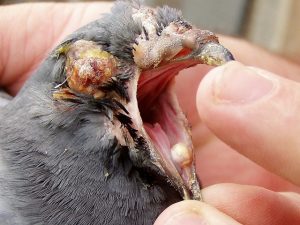
Effective use of medicines


Effective use of medicines

A few decades ago, all a pigeon fancier had to do was keep on his shelf a little copper gall, a little petroleum, a pinch of hypermanganese, a head of garlic and he or she had the feeling of being well equipped. Until recently, these had been more or less sufficient to remedy or prevent the occasional ailment.

This seems to be a never-returning condition. Today’s pigeon breeding and racing is unthinkable without the regular use of medication. There are many medicines and drugs that are used in pigeon keeping, from the cheap to the expensive, from the excellent to the less effective. The choice of medicines is almost endless – but our knowledge of them is unfortunately very limited.

Let’s not be afraid to say it: in pigeon breeding, we often give medicine to pigeons without having the faintest idea what we are giving and why, but we give it because we have heard from others that it works or read something online in our community group. And then we often find that it doesn’t work, and we just sneer the next time someone brings it up. But there is no such thing as a bad medicine, there is only a badly used medicine. All medicines are good if they are used for what they are supposed to be used for and used in the way they are supposed to be used.

A good example is the many phone calls from pigeon fanciers reporting that human metronidazole tablets are ineffective, no good for anything, they have been watering their pigeons for five days and it has only got worse. Metronidazole is a very effective agent against trichomonads (canker), but it is NOT soluble in water. Not even a little bit. That is why the quarter or eighth of a tablet should be placed directly into the beak of the pigeon. If you put it in drinking water, the carrier and coating material does dissolve, but the active ingredient itself, being insoluble, it will settle to the bottom of the container and is poured out at the next water change.

It is important to be aware of the correct use of medicines. If only because medicines are expensive and getting more expensive. However, any badly administered treatment is not just a waste of money, it causes much more harm than that. The harms caused by poor use of medicines include:

– we lose a lot of valuable time
– unnecessarily burdening an already sick body with side effects
– we promote the development of antibiotic resistance, strengthening the enemy

The result: the loss of a lot of money and a lot of pigeons

Inappropriate treatment makes patients sicker, not better. It is no wonder that few patients survive “belly flop” treatments. It would have been better to do nothing than to make matters worse with unnecessary poisons.

So we are losing a lot of valuable pigeons that could have been saved, simply because of inappropriate application of the medicine.

Let’s summarise what you need to do to make your treatment a success. These are:

1. Successful treatment is based on a correct diagnosis – that is, knowing exactly what the disease is that you are facing and want to treat.

2. You need to choose the most appropriate medicine.

3. You must use the medicine in the right way.

In the right way, this is VERY important. If we do not have correct information about the following, the treatment will not be effective, but even harmful:

a. The right dose: depends on body weight and age.
b. Method of administration: drinking, feeding, tableting, injection, etc.
c. Time of administration: continuous throughout the day; several times a day; once a day; every other day; weekly etc.
d. Before, during or after feeding.
e. Duration of administration: only once; for days; weeks; months.
f. What not to give at the same time as the medicine.
g. What should be given at the same time as the medicine.
h. How to stop treatment: suddenly or with gradually reduced doses.
i. What to give after treatment.
j. When and how many times to repeat the treatment.

These requirements vary from medicine to medicine and may even vary depending on the disease.

Many things influence whether the treatment will be effective or miserable. There is really little chance that someone who is inexperienced in these matters will accidentally hit the right application. It is much more likely that he will have a bad experience with the medicine, that he will not trust it, even though it may be the medicine that would be the best solution in the next case.

It has been my experience over decades that the most successful fanciers are those who use as little medication as possible, but as precisely as possible. This has a much greater impact on results than who has the more valuable pigeons.


Use as few medicines as possible and use them as precisely as possible


As many respected authors have written, it is almost unpredictable how the offspring of a super pigeon will perform. What can be predicted, however, is that poorly medicated super individuals will not only fail to win races, but often will not even come home.

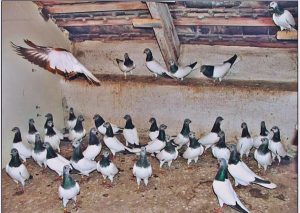
*

There are instructions on the packaging of medicines to help you use them, but in most cases this is very little to help you succeed. We often look in vain for the dosage for pigeons on the label, as well.

If you are unsure about the use of a medicine, ask your vet. If you can’t get in touch with your vet, ask us. (“Ask” button in the main menu).

You will also find detailed instructions for the use of more and more medicines on this growing website.

*

You can find more information on these topics in my world-famous specialist books:

Breeding season

Pigeons and their Economical Health Care

Vets’ Tips for Fanciers

Share on facebook
Facebook
Share on twitter
Twitter
Share on linkedin
LinkedIn